Kuzzle IoT
Managing Public Lighting with Kuzzle

LED retrofitting is often cited to highlight the energy-saving potential of public lighting. Remote management is the natural next step in reducing energy costs for French local authorities. Between rising travel costs related to programming and maintenance, the widespread adoption of nighttime dimming or intensity modulation, and the need to remotely trigger emergency lighting in the event of an incident, there is no question about the relevance of remote public lighting management. However, there are a few subtleties to master in order to successfully deliver your project without being locked into a proprietary technology ecosystem.
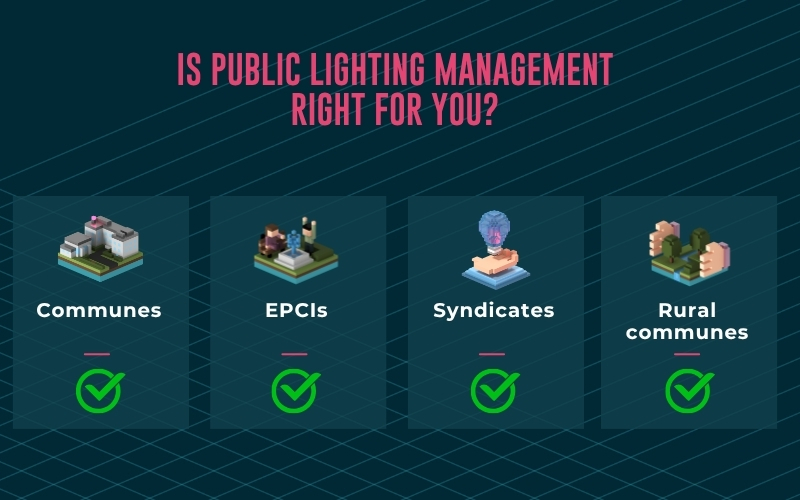
Who is concerned by public lighting?
Public lighting management is the responsibility of the municipality, which can choose to delegate it entirely while retaining control over emergency activation.
They trust us
Kuzzle’s IoT, Data, and Hypervision platform addresses Smart City, Smart Building, Smart Industry, Smart Logistics & Transport, and Connected Healthcare use cases, as well as large-scale IoT data processing.










Improved service quality while generating savings
The ability to adapt public lighting programming, detect malfunctions, and monitor consumption details without travelling enables finer, more responsive management while reducing costs associated with managing the luminaire and street cabinet fleet.

Energy consumption reduction
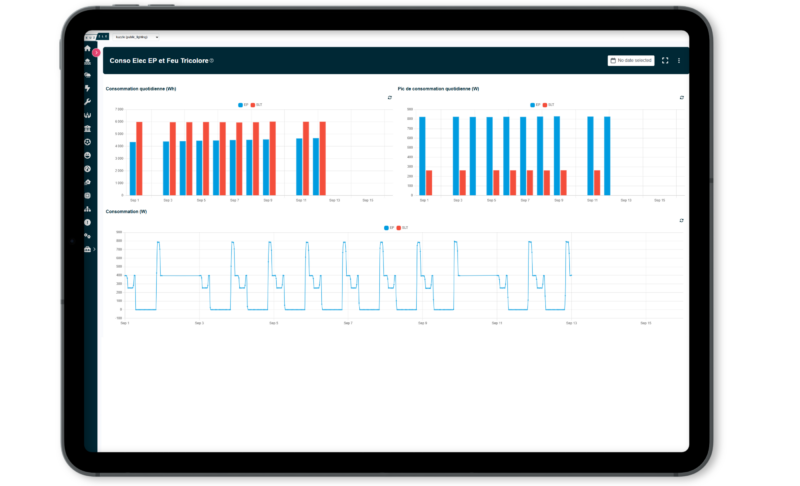
Remote management greatly facilitates the implementation of nighttime dimming or intensity modulation, which are the main sources of energy savings after LED conversion. By cross-referencing programming data with energy consumption data on the Kuzzle platform, finding the right balance between the lighting level expected by users and energy savings becomes much easier.

Fewer trips, more responsiveness
Modifying the programming schedule without having to travel and manually intervening on each cabinet saves multiple trips per year. Conversely, sending an emergency lighting command in the event of an incident or detecting a fault has never been so simple and fast thanks to Kuzzle.

Optimised maintenance, a more reliable fleet
By detecting lighting faults, untimely switch-offs and switch-ons, and with the right alert management protocol, maintaining the luminaire fleet becomes more efficient. Fault detection also helps optimise preventive interventions. This all contributes to a higher quality of service and greater reliability across the entire luminaire fleet.
Adapting management to local specificities and analysing data
As with any project involving both piloting and data analysis, rights management and adaptation to user needs are absolutely essential for successful adoption by the relevant departments and elected officials. A solution that adapts to desired management modes, and not the other way around, is therefore indispensable.
Your programming methods
School holidays, local event calendar adjustments, time changes… Programming subtleties are numerous, even more so in contexts of pooling at the inter-municipal or departmental level, where each municipality has its own imperatives by district, street, or luminaire point.
A clear vision of the programming calendar and data processing methods (piloting, fault detection, consumption analysis) is the starting point for any successful project.
Cabinet-level or luminaire-level control
Control and measurement methods are numerous: individual luminaire management, cabinet-level grouping, LoRaWAN connectivity, radio mesh, cellular… Deployed fleets increasingly tend toward a heterogeneity of controllers present at the territory level.
Interoperability of deployed hardware is therefore an essential prerequisite for effective remote management of the entire luminaire fleet, regardless of the protocols used (TALQ v2 or otherwise).
A platform for piloting, supervising and analysing
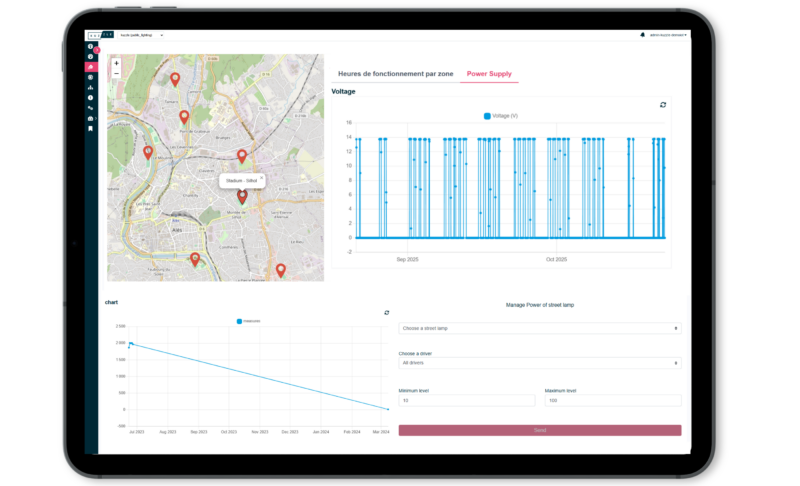
To manage complex programming methods, optimise responsiveness in the event of a fault, and supervise the overall consumption of an entire fleet, an equipment- and connectivity-agnostic platform with advanced piloting and data processing functions is a true guarantee of project success on a day-to-day basis.
This is precisely in these challenging contexts that Kuzzle Hypervision proves its full value.
Let’s discuss your business challenges together!
At Kuzzle, every project starts with a conversation.
We take the time to understand your objectives, your constraints in the field, and your business priorities.
What makes the difference? A dedicated team that supports you from the initial question to the scaling-up phase.
Our experts help you clarify your priorities, identify your most impactful use cases, and structure your projects with complete confidence.
Your challenges are unique. Let’s discuss them together.
Manyuse cases to manage and pilot your public lighting
Kuzzle offers granular piloting levels and different scenarisation contexts to cover all your lighting use cases.
Cabinet-level lighting management
Managing your luminaire fleet at cabinet level is now the most common approach: it allows you to pilot programming, dimming, and the sending of on/off commands across an entire street or several streets. In terms of energy savings from nighttime dimming or intensity modulation, the return on investment is particularly positive — with -40% on trips related to programming and luminaire maintenance thanks to fault detection.
The Kuzzle Hypervisor allows piloting a heterogeneous cabinet fleet regardless of connectivity, with access to advanced scenarisation, alert, and analysis features.
Luminaire-level lighting management
Luminaire-level piloting is a powerful lever for finely adapting lighting to actual footfall, guaranteeing a sense of security, or extending the lifespan of luminaires.
By adapting light dimming to real-time mobility (vehicle, bicycle, pedestrian detection) and integrating complex scenarisation methods (30-zone, cycling paths, etc.), the improvement in lighting service quality is very visible to local administrations.
The Kuzzle platform is the ideal tool for processing large volumes of data with very fine granularity while adapting the tool to the different professional profiles that use it.
Intelligent scenic lighting
Showcasing architectural heritage through dynamic lighting requires coordination between the event calendar, animation scenarios, and permanent lighting programming.
By harmonising all calendars with fine scenarisation conditions such as colour management, timing, gradients, and sparkle effects, all in a single tool and without travel, putting a territory’s assets in the spotlight is no longer a technical challenge for agents.
Kuzzle’s Hypervisor offers the capacity to pilot all lighting methods in a unified manner to guarantee the success of luminaire fleet management.
Adaptive lighting for mobility flows
Nighttime dimming, while beneficial both for local finances and biodiversity, can spark lively debates regarding users’ sense of security — particularly among the most vulnerable in the dark: pedestrians and cyclists. By adapting lighting levels to real mobility flows, a perfect compromise is possible between preserving operating budgets and the environment on one hand, and securing travel for all parties on the other.
Kuzzle doesn’t just cross-reference mobility data with luminaire dimming — the platform also manages the “halo effect” and the specificities of each axis.
Recurringmistakes in public lighting management projects
As with all use cases combining data and connected objects, the pitfalls to avoid are at least as much about governance as they are technical aspects. From the choice of indicators to exploit to the scaling conditions, passing through stakeholder role distribution and integration of existing data, here is the essential guide to what not to do to make your public lighting project a success.

Underestimating connectivity
Connectivity is the technical backbone of remote management: without a reliable network, remote piloting becomes impossible or unreliable. Some areas, particularly rural or densely urbanised ones, may suffer from insufficient network coverage (2G/3G/4G, LoRa, etc.), leading to data losses or unexecuted commands. It is crucial to map the actual coverage across the territory and plan for redundant solutions (e.g. gateways, mesh networks) to avoid blind spots. Connectivity costs (subscriptions, data) must also be anticipated over the long term. Finally, signal quality can vary depending on the season or public works, hence the importance of field tests prior to deployment and contracts with operators guaranteeing a service level.

Only offering complex interfaces
An overly technical or overloaded remote management interface discourages end users (technical agents, elected officials), reducing system efficiency. Local authorities need intuitive tools, adapted to expert and non-expert profiles alike, with essential functions accessible in just a few clicks (e.g. group on/off, visual alerts). Poor ergonomics can also multiply manipulation errors, with direct impacts on service quality (e.g. switching off an entire area by mistake). It is recommended to involve future users from the start of the project, to prioritise customisable dashboards, and to plan for tailored training. A simple and effective interface promotes adoption and the long-term success of the projec

Missing out on available funding
Public lighting remote management projects can benefit from numerous financial aids (ADEME, regions, metropolises, European funds, energy savings certificates), but many local authorities miss these opportunities or fail to apply for them due to lack of information. For example, CEE (Energy Savings Certificates) can finance part of the investments, while certain regions offer specific subsidies for the energy transition. Failing to find out in advance can lead to an unbalanced budget or unexploited savings. It is essential to rely on partners (engineering offices, energy syndicates) to identify eligible schemes and build solid files. Keeping an active watch on calls for projects and planning ahead with a deposit calendar helps avoid missing key deadlines.

Not accounting for the specificities of EP management
Public lighting is not just any equipment: it must meet strict standards (lighting standards, legal schedules) and public service requirements. A poorly adapted piloting system can generate malfunctions (e.g. untimely switch-offs, insufficient lighting) with direct consequences for user safety. It must integrate local constraints (school zones, roundabouts) and provide emergency scenarios (e.g. manual override mode). Moreover, luminaires have varied lifespans and technologies (LED, sodium), requiring specific adjustments. Ignoring these specificities can lead to illusory energy savings or disputes with residents.

Uploading data without anticipating professional workflows
Collecting data without integrating it into existing business processes (maintenance, energy management, user services) amounts to under-exploiting the potential of remote management. For example, fault alerts not linked to the maintenance management software delay repairs. It is necessary to map the needs of the services (who receives alerts? how are interventions prioritised?) and to automate flows between remote management and other tools (CMMS, GIS, etc.). Without this integration, data becomes a burden rather than a lever for efficiency. A reflection on useful indicators (e.g. fault rates, achieved savings) and their sharing between departments is also essential to add value to the project.

Over-engineering your project
Wanting to pilot everything from the outset — with advanced features (dynamic dimming, multi-sensor integration) or a massive deployment — can make the project unmanageable, costly, and complex to maintain. Over-engineering often leads to delays, cost overruns, or under-utilisation of features. It is preferable to start with a pilot project on a representative area (e.g. one district), with clear objectives (e.g. reducing consumption by 20%), and then expand progressively based on field feedback. This approach allows adjusting technical choices, forming teams without overwhelming them, and demonstrating the project’s value before full deployment. A realistic and progressive project has more chances of success and long-term viability.
Our lastest success stories

Smart City
Smart Building Management
The Côte-d’Or Department (21) deployed, in record time, a demonstrator for the monitoring and automation of public buildings

Smart City
Territorial Hypervision
Development of a hypervision platform for monitoring air quality and electricity for the SIEA.

Smart City
Territorial hypervision platform
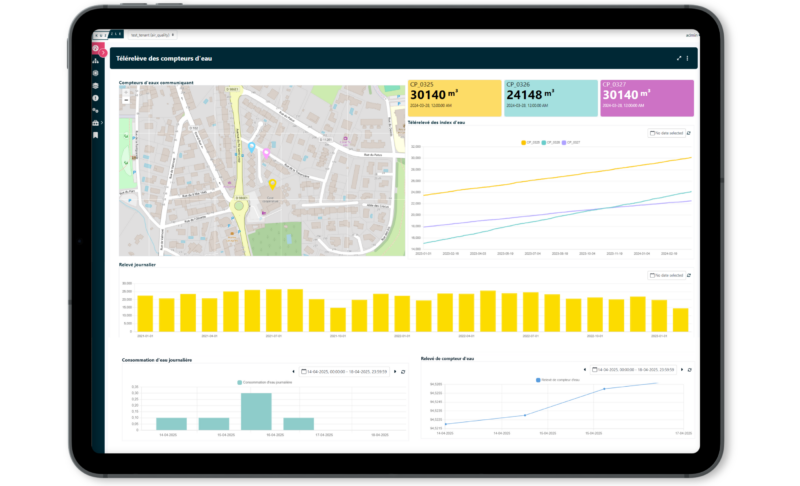
Real-time hypervisor for managing air quality and energy consumption in the Alès conurbation.
Expert support, clear indicators, measurable ROI.
At Kuzzle, we offer more than just a platform: we support you at every stage of your project, from defining your use cases to operational implementation and scaling up.
This approach guarantees you a solution that is truly tailored to your business challenges, capable of leveraging your data, streamlining your processes and producing concrete results.
Tailor-made support, closely aligned with your business realities.