Kuzzle IoT
Building Management with IoT

Deploying sensors is not enough to manage a building portfolio, but it at least helps to increase the efficiency of existing control systems and to provide means of action on buildings, whether equipped or not.
The benefits are numerous: an average reduction of 10 to 30% in consumption, improved user comfort, and better-informed renovation decisions. In addition, it contributes to compliance with real estate regulations (Tertiary Decree and BACS).
With an extremely dense ecosystem of sensors and actuators, the technical possibilities are numerous and require, above all, equipping oneself with hypervision and governance tools to bring consistency to the data, contextualize the collected information and facilitate both day-to-day operations and medium- and long-term decision-making.
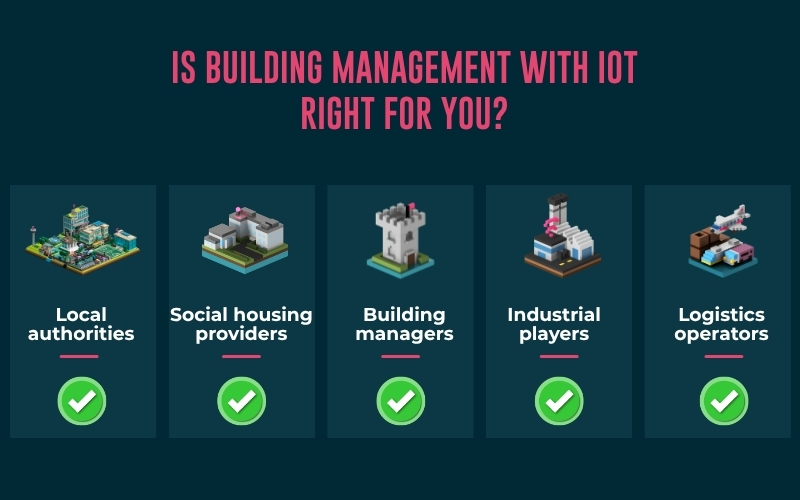
Who is concerned by building management?
Whether it concerns energy monitoring, comfort or overall control, any stakeholder with one or more buildings is concerned.
They trust us
Kuzzle’s IoT, Data, and Hypervision platform addresses Smart City, Smart Building, Smart Industry, Smart Logistics & Transport, and Connected Healthcare use cases, as well as large-scale IoT data processing.










Manager or occupant: benefits at every level
Discover how to reduce your energy costs, preserve the environment and adapt your consumption to real needs thanks to innovative energy management solutions.

Reduce energy consumption
With an average of 10 to 30% savings and up to 50% for the least efficient buildings, building management plays a role not only in the management of fluids (water, electricity, gas). Detecting consumption peaks, adapting heating periods according to real occupancy, sub-metering are all levers that can be activated to effectively reduce costs.
Source: ACEEE

Improve occupant comfort
Occupant comfort is not an optional notion: beyond regulatory obligation in ERP (public-access buildings), its improvement reduces absenteeism by 11 to 17% in schools, for example. Monitoring hygrothermal comfort also ensures the same level of comfort for users while reducing energy consumption related to heating and ventilation.
Source: Technical University of Berlin

Better decision-making with a unified view
The aggregation of real estate data, existing control systems and energy consumption data enables the implementation of hypervision as a real decision-support tool. Thanks to the cross-referencing of all this data, energy renovation arbitrations are more precise and usage adapts to the real capacities of buildings.

We want to improve energy management and the perception of users according to installations, for example if such a room has heating. And in the long term, we also want to carry out an environmental assessment over the life cycle of the solution.
”Acomplete value chain to orchestrate
Building projects often start with adding a few sensors to refine the understanding of consumption or building usage. But projects that have a structural and long-term impact take into account all existing data, instrument where relevant and above all exploit data in a transversal and consolidated way.
Federate data from existing systems
The first step is to harmonize the multitude of existing data across the building portfolio: asset repository, Enedis and Gazpar APIs, OPERAT, BMS/SCADA systems, HVAC controllers, CMMS, Weather API…
This data notably makes it possible to contextualize consumption according to surface area, usage, building typology, external conditions and thus to save valuable investigation time in the interpretation of metering and sub-metering data. In most cases, existing data already constitutes a significant source of optimization even before instrumentation.
Instrument thanks to IoT
IoT sensors and actuators, often operating in LoRaWAN but compatible with other protocols (Modbus, Bacnet, KNX…), have 2 purposes:
- Go further in the analysis of existing data thanks to dynamic contextualization data such as hygrometry, occupancy, sub-metering.
- Control certain equipment with actuators such as thermostatic valves or connected circuit breakers.
Far from replacing BMS/SCADA systems, IoT ensures refined building control and increases ROI.
Analyze and operate from a unified platform
Interoperability constraints are strong, data harmonization and quality are essential and control indicators are numerous. This is the ideal playground for Kuzzle’s IoT, Data and Hypervision platform!
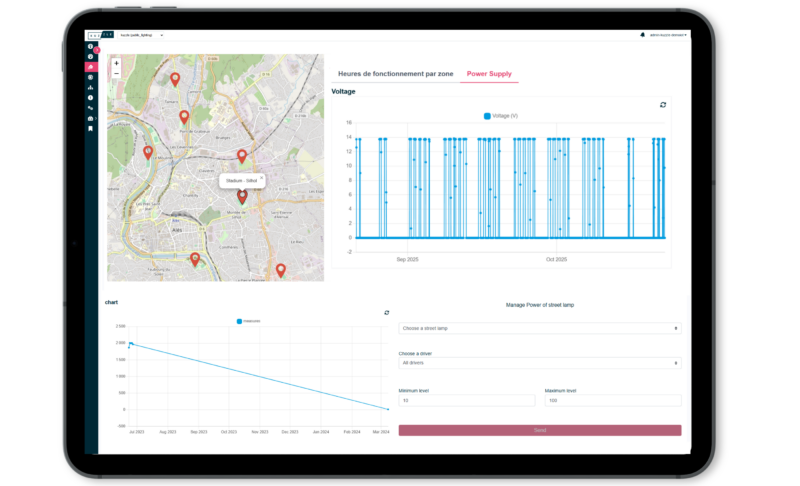
Our solution makes it possible to build advanced indicators (kWh/m², DJU, occupancy rate…), to plan control scenarios while adapting to different profiles: technical operator, energy manager, asset manager…
Let’s discuss your business challenges together!
At Kuzzle, every project starts with a conversation.
We take the time to understand your objectives, your constraints in the field, and your business priorities.
What makes the difference? A dedicated team that supports you from the initial question to the scaling-up phase.
Our experts help you clarify your priorities, identify your most impactful use cases, and structure your projects with complete confidence.
Your challenges are unique. Let’s discuss them together.
Many use cases to manage and operate your buildings
From meter reading to preventive maintenance optimization, including comfort and health risks, application examples are numerous and strongly depend on your objectives and the usage of your building stock. Each subject has its sensors and indicators available on Kuzzle platforms.
Metering & sub-metering of energy consumption
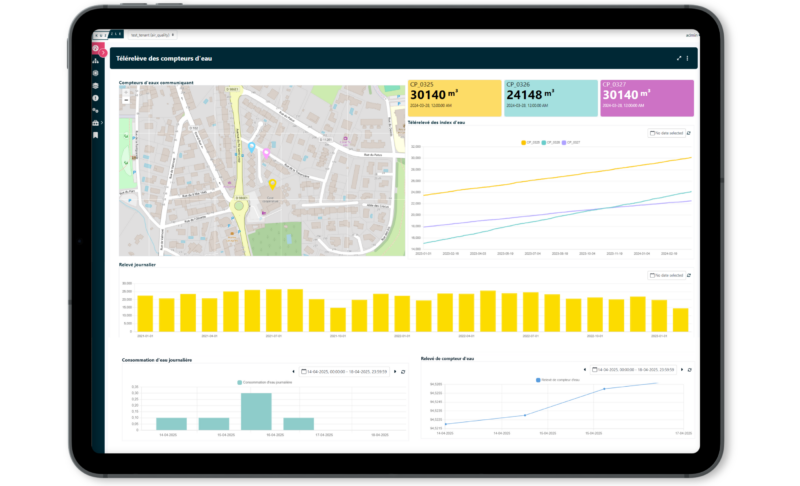
Reading meters, via LoRaWAN sensors or Enedis and Gazpar APIs, is generally the first step in energy monitoring to implement a unified view of the building portfolio, in line with internal organization. Consumption data can thus be analyzed, cross-referenced, contextualized and further enhanced with sub-metering sensors.
Kuzzle’s strength lies in its ability to transform these index readings into useful indicators: link with surface area, occupancy, building usage schedules…

Indoor air quality monitoring
Measuring indoor air quality in buildings is not only a regulatory obligation for ERP (public-access buildings), it is also a lever for HR performance (less absenteeism due to illness) and energy optimization (by adapting consumption to the actual occupancy of spaces). In sensitive contexts such as museums, it is also a lever for preserving artworks by ensuring optimal hygrometric conditions.
Kuzzle enables transforming a CO2 concentration index into an indicator of user exposure or space usage.

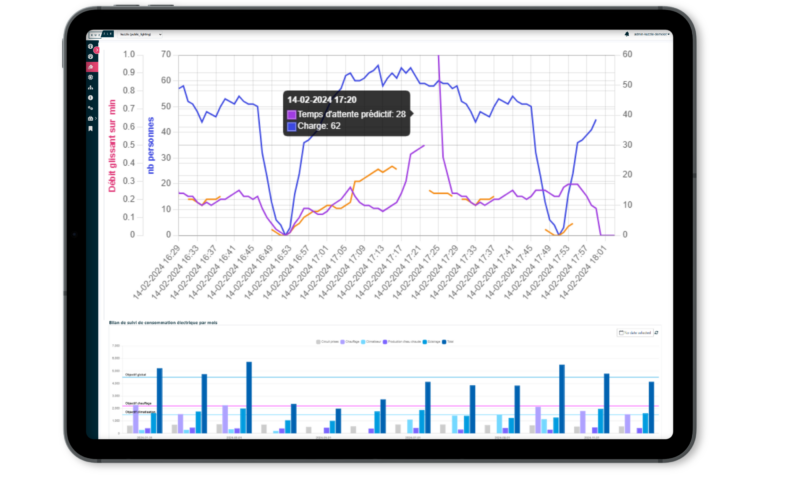
Monitoring of attendance and occupancy
Managing buildings means adapting to how occupants use them. To measure this usage, it is essential to know at least the occupancy level, and ideally the building attendance as a whole or across its different spaces.
This data makes it possible to adjust building operating schedules, heating and air conditioning programming, and the resources dedicated to public reception…
The Kuzzle Hypervision platform provides a consolidated and detailed view of your key information across your entire portfolio.

Heating control
Managing heating according to building occupancy periods and external conditions rather than with a continuous heating temperature guarantees an average saving of 28%*. Whether centrally or via thermostatic valves, this is a use with strong ROI potential provided that the right data is used: DJU, room schedules, weather forecasts…
Kuzzle functionalities drive the transition from static heating management to dynamic control based on the real usage of the building.
Source: Technical University of Dresden

Ventilation monitoring
Using pressure sensors to verify the level of clogging of ventilation systems has the dual advantage of generating savings both on the daily consumption of these systems and on their maintenance.
Kuzzle’s profile logic makes it possible both to generate alerts to trigger technical interventions and to have a forward-looking view of the renewal of your equipment fleet.

Hot water monitoring
Mandatory in Healthcare Facilities and ERP (public-access buildings), monitoring the risk of legionella is also a major issue in any type of building where users consume drinking water. IoT enables continuous, not one-off, supervision of this risk thanks to temperature monitoring in domestic hot water networks (55° minimum).
With data supervision and Kuzzle alerts, the risk is continuously controlled in the interest of building users.
Recurringmistakes in building management projects
As with all use cases combining data and connected objects, the pitfalls to avoid relate just as much to governance as to technical aspects. From the choice of indicators to be used, to scaling conditions, including the distribution of stakeholder roles and the integration of existing data, here are the key things not to do to successfully carry out a building management project.

Not clearly defining control objectives
The absence of precise objectives transforms an IoT project into simple data collection without impact. For example, wanting to “reduce energy consumption” is too vague: specific buildings must be targeted (schools, offices), measurable indicators (kWh/m², kWh/DJU), and realistic timelines (aligned with the Tertiary Decree). Without this, the collected data will not be used either to assess progress or to justify investments. The most successful projects start with SMART objectives (Specific, Measurable, Achievable, Relevant, Time-bound), such as reducing consumption by 20% for 5 pilot buildings within 2 years.

Not defining roles for data exploitation
IoT data only creates value if it is used by the right people. For example, technical operators need real-time alerts to act on equipment, while energy managers analyze seasonal trends to optimize investments. Forgetting to appoint responsible roles (energy monitoring, maintenance, reporting) or to train teams in the use of dashboards leads to underutilized data. A structured organization, with clear processes (e.g.: monthly indicator review meetings), is essential to turn data into actions.

Underestimating the integration of existing data
Many buildings already have data (BMS, SCADA, energy operators), but this data is often dispersed, not harmonized or incompatible between systems. Ignoring this existing data leads to costly duplication (e.g.: installing new sensors when ENEDIS or GRDF data is sufficient). A key step is to map available sources, standardize formats (kWh, timestamps), and integrate them into a single repository. This reduces costs and accelerates the implementation of reliable indicators.

Not taking the time to capitalize on initial deployments
Deploying IoT across an entire building portfolio from the outset is risky. The most effective projects start with pilot buildings to validate use cases, adjust indicators, and train teams. This phase helps identify obstacles (e.g.: missing data, resistance to change, sensor configuration procedures) and refine the strategy before large-scale deployment. Without this step, errors multiply and energy gains remain theoretical.
Our lastest success stories

Smart City
Smart Building Management
The Côte-d’Or Department (21) deployed, in record time, a demonstrator for the monitoring and automation of public buildings

Smart City
Territorial Hypervision
Development of a hypervision platform for monitoring air quality and electricity for the SIEA.

Smart City
Territorial hypervision platform
Real-time hypervisor for managing air quality and energy consumption in the Alès conurbation.
Expert support, clear indicators, measurable ROI.
At Kuzzle, we offer more than just a platform: we support you at every stage of your project, from defining your use cases to operational implementation and scaling up.
This approach guarantees you a solution that is truly tailored to your business challenges, capable of leveraging your data, streamlining your processes and producing concrete results.
Tailor-made support, closely aligned with your business realities.